In 2026, the Greek islands are facing a turning point. With new cruise taxes and strict daily limits on ports like Santorini, the era of “mega-ship” travel is being challenged by a more mindful, intimate alternative.
If you’re planning your Aegean escape, here is why stepping off the cruise liner and onto a sailing yacht is the best decision you’ll make this year.
Why a Sailing Yacht is Better than a Greek Island Cruise in 2026
We’ve all seen the photos: five massive cruise ships towering over the caldera in Santorini, pouring thousands of passengers into the narrow streets of Oia at once. By midday, the “magic” of Greece is often replaced by a sea of selfie sticks and souvenir shop queues.
In 2026, the Greek government has officially stepped in, introducing a €15–€20 “sustainability tax” per passenger for those arriving on large liners. But beyond the extra fees, there’s a fundamental shift in how people want to travel. Here is why the wind in your sails beats a balcony on a floating hotel.
1. True Sustainability: Sailing vs. Heavy Fuel
The environmental conversation has changed. Large cruise ships, often referred to as “floating cities,” have a massive footprint. Despite industry efforts to modernize, many still rely on heavy fuel oils and generate significant waste that puts a strain on fragile island ecosystems.
When you choose a sailing yacht, your “engine” is the Meltemi wind.
-
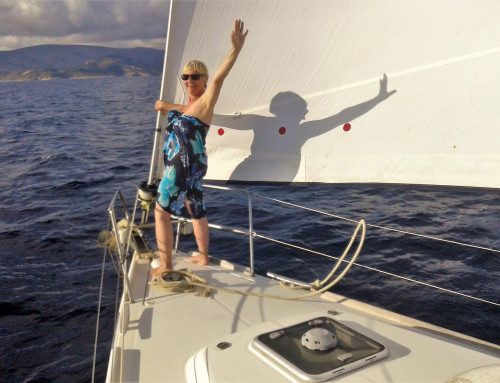
Zero-Emission Travel: On a sailing yacht, you aren’t just a spectator of the sea; you are part of it. When the sails are up, the only sound is the water against the hull.
-
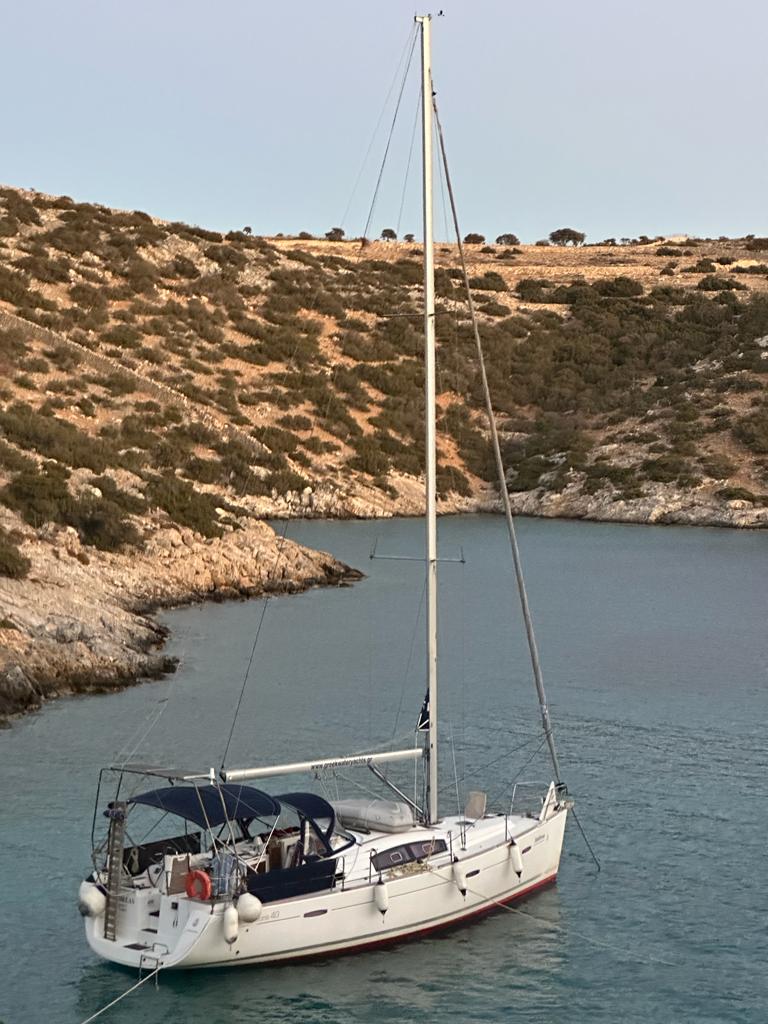
Low Impact: Smaller vessels don’t require massive deep-water concrete piers. We anchor in natural bays, use minimal water, and support local waste management rather than overwhelming it.
2. The “No-Crowd” Guarantee
Starting this year, Greece has implemented a 8,000-passenger cap per day on its most popular islands. If you’re on a cruise ship with 4,000 other people, you’re already using up half that quota.
On a yacht, you have a “No-Crowd” guarantee by design.
-
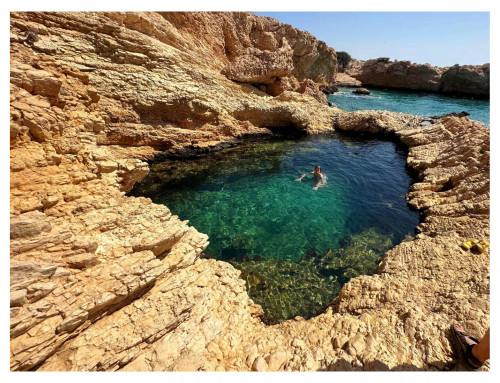
The “Inverse” Schedule: While the cruise crowds hit the shore at 10:00 AM, we’re diving into a secluded cove in Polyaigos or Koufonisia.
-
Sunset Solitude: We wait until the “Cruise-Zillas” have departed for their next port. When the sun dips below the horizon, you’ll find yourself sitting in a family-run taverna in Folegandros, sharing a carafe of wine with locals, not 5,000 tourists.
3. Access to Hidden Ports (The “Big Boat” Barrier)
Large cruise ships are restricted by their size. They can only dock at major ports with deep-water infrastructure. This means their itineraries are almost identical: Athens, Mykonos, Santorini, Crete.
A sailing yacht is your “backstage pass” to the islands the big ships literally can’t reach:
-
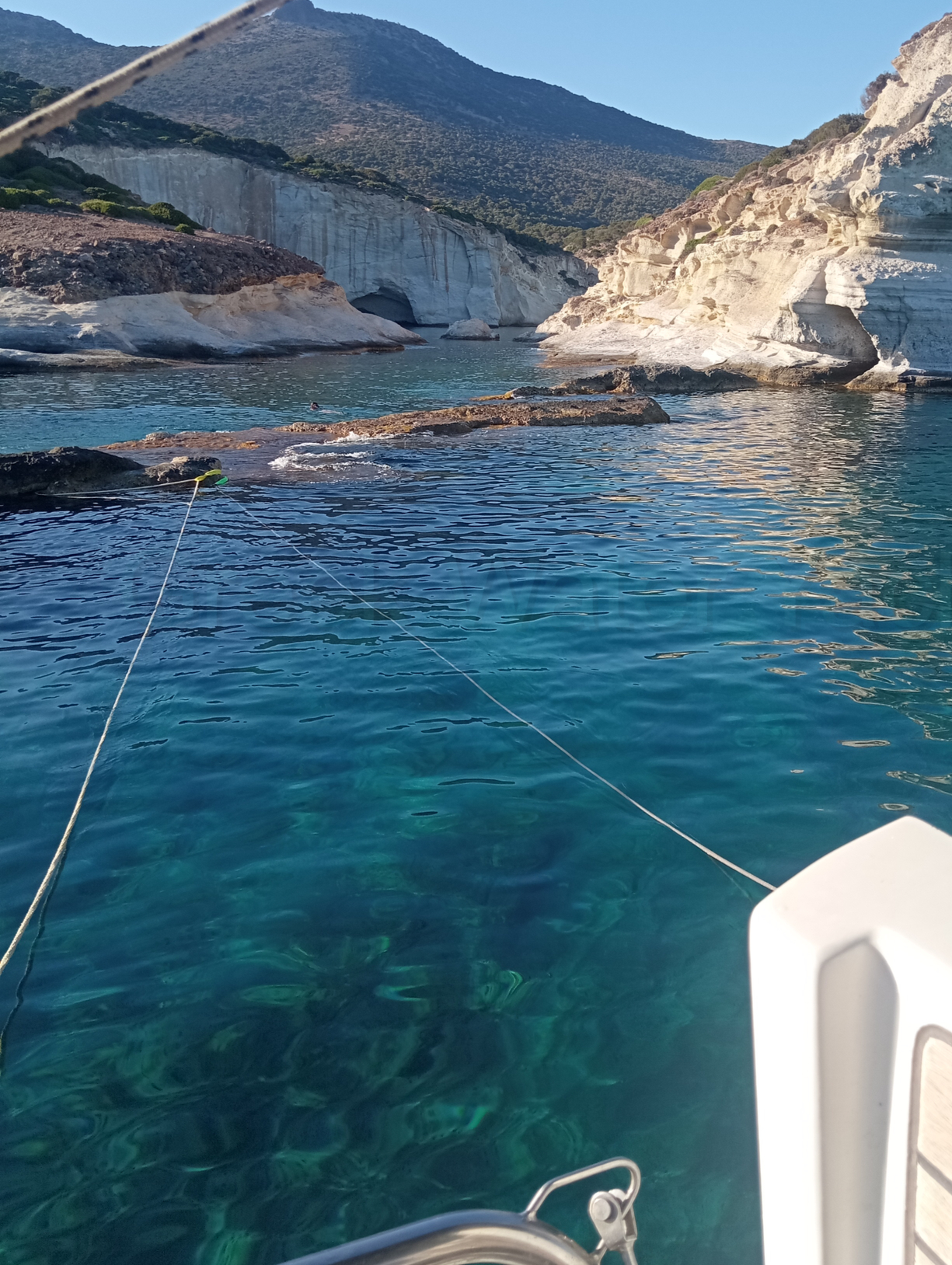
Kleftiko, Milos: A pirate’s hideout with white volcanic arches where you can swim through sea caves.
-
Small Cyclades: Tiny gems like Schinoussa or Donousa, where the water is so clear you can see your anchor 15 meters down on the sandy floor.
4. Experience “Slow Travel”
A cruise is about the ship; a sailing trip is about the islands. On a cruise, you are a passenger. On a yacht, you are a traveler. You can decide to stay an extra hour at a beach because the snorkeling is too good to leave, or change course because the captain heard about a fresh catch of grilled octopus at a tiny harbor nearby.
The Verdict for 2026
In a world that is increasingly crowded and automated, the luxury of 2026 isn’t a gold-plated lobby or a 24-hour buffet. The real luxury is space, silence, and authenticity. By choosing a sailing yacht with Greek Islands Sailing, you aren’t just visiting Greece—you’re living it. You’re supporting local communities, protecting the Mediterranean, and finding the quiet corners that made these islands famous in the first place.
Ready to trade the crowd for the coast? View our 2026 Greek Island Sailing Itineraries